

Beyond Cooling: How Spray Foam Insulation Fights Extreme Humidity and Prevents Mold in NOLA Homes
You know the feeling. It’s August in New Orleans, and the air is so thick you can wear it. Your air conditioner has been blasting for hours, the vents are blowing cold, but your skin still feels damp. A musty smell lingers in the closets, and you’re paying a fortune to cool a home that never truly feels comfortable. You’re fighting a war against the heat, but your real enemy isn’t just the temperature—it’s the oppressive, moisture-laden humidity our climate is famous for.

You’re paying to cool your home, but you’re still not comfortable. Why? Because your AC is fighting a losing battle against an endless invasion of humid air. For over 18 years, Sunlight Contractors has seen this exact scenario play out in homes across Louisiana. We understand that solving this problem requires more than just a powerful HVAC unit. This post will explain how traditional insulation fails in our unique climate and how spray foam insulation offers a superior, multi-faceted solution that goes far beyond cooling to actively fight humidity and prevent mold.
Key Takeaways
- Your Real Enemy is Air Infiltration: The primary reason your home feels damp is that hot, humid New Orleans air is constantly leaking inside through countless gaps and cracks, forcing your AC to work overtime.
- Spray Foam Creates an Air Seal: Unlike traditional insulation, spray foam expands to fill every crevice, creating a monolithic air barrier. By stopping uncontrolled air movement, you stop uncontrolled moisture movement.
- Closed-Cell Foam is a Moisture Barrier: Closed-cell spray foam is the premium choice for Louisiana, acting as a vapor retarder that blocks moisture itself from passing through your walls and roof deck.
- Mold Prevention is the Goal: By eliminating the moisture that traditional insulation traps, spray foam removes the primary ingredient mold needs to grow, protecting your home’s structure and your family’s health.
The New Orleans Humidity Battle: Why Your AC is Losing the War
In a climate like ours, your home is under constant assault from moisture. This isn’t just a comfort issue; it’s a direct threat to your property, your health, and your wallet.
The Vicious Cycle of Air Infiltration and Moisture
Think of your home’s structure like a leaky boat. It has countless tiny holes—around windows, pipes, electrical outlets, and in the attic and crawlspace. Hot, humid New Orleans air pushes its way through these gaps via a process known as the stack effect.
This constant infiltration forces your HVAC system into a state of perpetual crisis. It’s not just cooling the air anymore; it’s also trying to dehumidify an endless supply of incoming moisture. The result is an overworked system, inconsistent temperatures, and sky-high energy bills that never seem to go down.
Why Old Insulation Can Become a Breeding Ground for Mold
The problem gets worse with outdated insulation. Traditional materials like fiberglass batts and blown-in cellulose are like sponges. They can effectively slow heat transfer, but they do little to stop air and moisture movement. Over time, these materials absorb and trap the humidity that infiltrates your home.
This damp, fibrous insulation, pressed against organic materials like wood framing and drywall, creates the perfect five-star resort for mold and mildew. Once it starts, it can spread unseen within your walls and attic, releasing spores that degrade your indoor air quality and can lead to allergies, asthma, and other respiratory issues.
The Silent Damage: Wood Rot, Pests, and Poor Air Quality
Uncontrolled humidity is a destructive force. The consequences go far beyond a damp feeling and musty smells:
- Structural Damage: Persistent moisture leads to wood rot in your subfloor, framing, and roof decking, compromising the structural integrity of your home. We’ve seen firsthand how moisture and termite damage can turn into a homeowner’s worst nightmare.
- Pest Infestations: Termites, cockroaches, and other pests are drawn to damp, dark environments. A humid crawlspace or attic insulated with soggy fiberglass is an open invitation.
- Poor Health: The combination of mold spores, dust mites that thrive in humidity, and off-gassing from decaying materials creates an unhealthy indoor environment.
The Game-Changer: How Spray Foam Insulation Creates a Moisture-Proof Barrier
To win the war against humidity, you can’t just fight the symptoms. You have to attack the source. This is where spray foam insulation fundamentally changes the game.
It’s Not Just Insulation, It’s an Air Seal
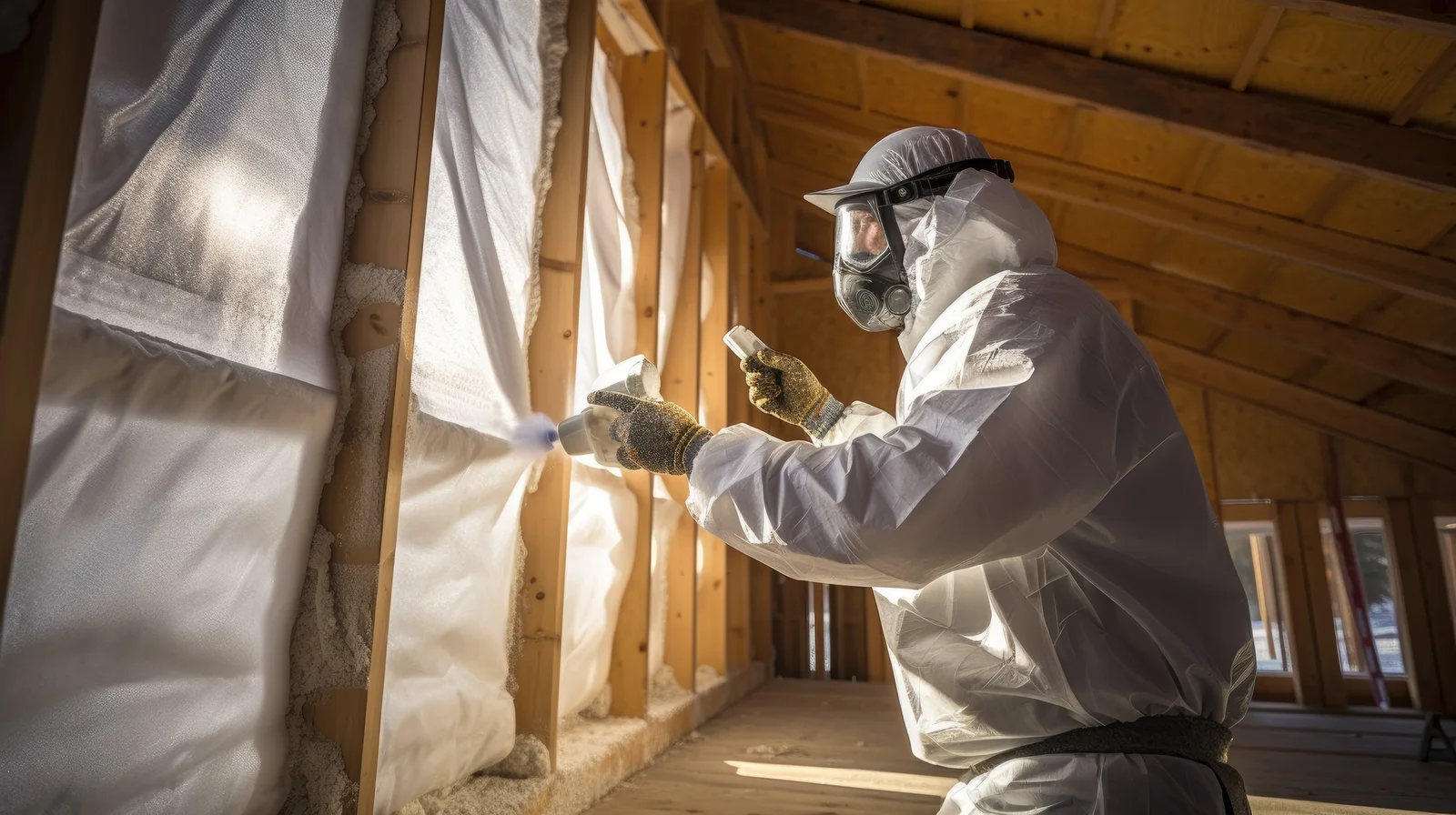
The most significant advantage of spray foam is its application process. Sprayed as a liquid, it expands up to 100 times its original volume, filling every crack, crevice, and gap. It cures into a rigid, seamless barrier that adheres directly to the structure.
This creates a comprehensive air seal, effectively stopping uncontrolled air leakage. The key takeaway is simple: By stopping uncontrolled air movement, you stop uncontrolled moisture movement. This single step transforms your home’s building envelope from a leaky sieve into a protected, sealed structure.
Closed-Cell Spray Foam: Your Home’s Raincoat
While both types of spray foam provide an air seal, closed-cell spray foam is the premium solution for moisture control in a demanding climate like NOLA’s. Its dense, closed-cell structure makes it highly resistant to water absorption.
Crucially, it acts as a Class II vapor retarder. This means it doesn’t just block air; it blocks moisture vapor itself from passing through. It’s like giving your home a high-performance raincoat, preventing humid outdoor air from saturating your walls and roof deck. This is a critical function that fiberglass and open-cell foam cannot provide on their own.
Eliminating Condensation and “Attic Rain”
A common problem in New Orleans is a hot, humid attic where condensation forms on cold HVAC ductwork, dripping onto the ceiling and causing stains and damage. This “attic rain” is a direct result of the extreme temperature and humidity difference between the air inside your ducts and the air in the attic.
By insulating the roof deck with spray foam, you create an unvented, conditioned attic. This brings your attic and ductwork inside the home’s thermal and moisture envelope. The temperature in the attic stabilizes, eliminating the drastic difference that causes condensation and protecting your entire HVAC system.
The Real-World Benefits: What This Means for Your Home and Wallet
The technical advantages of spray foam translate directly into tangible, everyday benefits for you and your family.
Finally, Real Comfort: A Drier, Cooler Home
When your home is properly air-sealed and insulated with spray foam, the difference is immediate. The air feels crisp and cool, not damp and clammy. The AC can finally do its job efficiently, maintaining a consistent temperature without running constantly. You gain control over your indoor environment.

A Healthier Living Space: Prevent Mold Before It Starts
Spray foam is a proactive solution for a healthier home. It’s an inert polymer that provides no food source for mold. More importantly, by creating an air and moisture barrier, it removes the key ingredient mold needs to grow: water. You aren’t just cleaning up mold; you’re creating an environment where it can’t get a foothold in the first place. This is the core of effective moisture remediation.
Significant Energy Savings
An airtight home is an efficient home. When your AC isn’t battling a constant influx of hot, humid air, it runs less and works more effectively. According to the U.S. Department of Energy, air sealing and insulating can save homeowners an average of 15% on heating and cooling costs. For many NOLA homeowners, the savings are even more dramatic, often leading to a 50% reduction in utility bills.
Added Structural Integrity and Pest Deterrence
Closed-cell spray foam offers two powerful bonus benefits for Louisiana homeowners. First, its rigid nature and strong adhesion add structural strength to your walls and roof deck, effectively “gluing” the structure together. This added rigidity provides an extra layer of protection against high winds during storms. Second, the solid, seamless barrier is impenetrable to most pests, helping to protect your home from termites and rodents.
Why Experience Matters: Your Partner for a Healthier NOLA Home
Understanding the solution is one thing; implementing it correctly is another. When it comes to spray foam, proper installation is absolutely critical for performance and safety. This is not a DIY project or a job for an inexperienced crew.
The Sunlight Contractors Difference: Over 18 Years in the Louisiana Climate
For over 18 years, Sunlight Contractors has been on the front lines of the battle against Louisiana’s heat and humidity. Our experience isn’t just in insulation; it’s in understanding the unique building science challenges of our region. From historic homes in the French Quarter to new constructions in Metairie and raised homes in Slidell, we know how to diagnose and solve the complex issues that cause discomfort, high energy bills, and moisture damage. You need to choose a spray foam contractor with proven, local expertise.
More Than Just Insulation: A Holistic Approach
Because we also specialize in damage restoration, foundation repair, and home renovations, we have a unique, holistic understanding of how a home’s systems work together. We see the consequences of poor moisture management every day. This perspective allows us to do more than just install a product.
We don’t just install insulation; we diagnose and solve the root causes of moisture, comfort, and energy problems in your home.
Take Control of Your Home’s Climate Today
Stop fighting a losing battle against humidity with an overworked AC and outdated insulation. The real, long-term solution is to create a sealed, protected, and efficient home environment with professionally installed spray foam insulation. It’s an investment in superior comfort, mold prevention, a healthier living space, and lower energy bills for years to come.
Ready to stop the struggle with extreme humidity and prevent mold in your NOLA home for good? Contact the experienced team at Sunlight Contractors today for a comprehensive evaluation and a free estimate. Call us at (504) 222-2082 to take the first step toward a more comfortable, healthier, and energy-efficient home.