

The “Flash and Batt” Lie: Why This Hybrid Insulation System Is a Mold Trap in Louisiana’s Climate
The “Flash and Batt” insulation system is a dangerous choice for Louisiana homes because it creates an internal condensation surface within wall cavities, trapping moisture that leads to hidden mold, rot, and structural damage in our high-humidity climate.
Introduction
The sales pitch is tempting. Contractors and homeowners hear about “Flash and Batt” insulation and think they’ve found the perfect compromise: get the air-sealing benefits of spray foam insulation at a fraction of the cost. It’s sold as the “best of both worlds,” a smart, budget-friendly upgrade over standard fiberglass.
Let’s be direct: in a climate like Louisiana’s, this “perfect compromise” is a lie. It’s a ticking time bomb for moisture, mold, and structural rot that will cost you far more in the long run. Here at Sunlight Contractors, with over 18 years of hands-on experience insulating and performing damage restoration on homes across New Orleans and all of Louisiana, we’ve torn out more failed Flash and Batt systems than we can count. We’ve seen firsthand how this lie costs homeowners thousands in remediation.
Key Takeaways
- Flash and Batt insulation creates a condensation point inside your wall cavity, trapping moisture where you can’t see it.
- In Louisiana’s high-humidity climate, this trapped moisture inevitably leads to hidden mold growth, wood rot, and poor indoor air quality.
- The thin “flash” layer of foam is often installed imperfectly, leaving air gaps that negate its primary purpose and allow humid air to penetrate the wall.
- A full application of closed-cell spray foam is a far superior system, creating a monolithic air, vapor, and thermal barrier that is ideal for the Gulf Coast.
- Choosing an experienced, local insulation contractor who understands our unique climate is critical to protecting your home’s value and your family’s health.
TL;DR
The “Flash and Batt” hybrid insulation system, which combines a thin layer of spray foam with fiberglass batts, is a dangerous choice for homes in New Orleans and Louisiana. It creates a surface within your walls where warm, moist air condenses, allowing the fiberglass to soak up water like a sponge. This leads to hidden mold, rot, and energy loss. For our humid climate, a properly installed, full closed-cell spray foam system is the only way to guarantee a true air and moisture seal, protecting your home and health.
Flash and Batt insulation is a hybrid system that attempts to combine the air-sealing of spray foam with the low cost of fiberglass batts.
This approach is fundamentally a cost-cutting measure that sacrifices performance and safety, especially in the humid South. It’s an idea that looks good on paper to the uninformed but fails catastrophically in practice.
The Theory: How It’s Supposed to Work
The concept is straightforward. First, a contractor applies a thin layer, typically 1-2 inches, of spray foam directly to the interior side of the exterior sheathing. This is the “flash.” The primary goal of this layer is to act as an air seal, stopping drafts from penetrating the wall cavity.
After the foam cures, traditional and inexpensive fiberglass or mineral wool batts are pushed into the rest of the wall cavity to achieve the desired R-value. This is the “batt.” In theory, you get the air-tightness of foam and the cheap insulating power of fiberglass.
The Sales Pitch: Why It Seems Like a Good Idea
The appeal is almost entirely financial. A Flash and Batt system is significantly cheaper than a full cavity of spray foam insulation. It’s marketed as a major upgrade over a wall filled with only fiberglass, promising to solve air leakage problems that lead to high energy bills. For builders or contractors who aren’t experts in building science for hot, humid climates, it appears to be a logical, budget-friendly compromise. They sell it as a value-added feature, but they are actually building a hidden failure into the home.
The primary failure of Flash and Batt in Louisiana is its creation of a condensation plane deep within your walls.
This system’s fatal flaw isn’t just about poor installation—it’s baked into the design. It actively creates the perfect conditions for moisture to accumulate where it will do the most damage, turning your walls into a hidden science experiment for mold and rot.
Building Science 101: Understanding the Dew Point in New Orleans
To understand the problem, you need to understand the dew point.
Dew Point: The temperature at which airborne water vapor condenses into liquid water.
Here in Louisiana, the air is almost always saturated with moisture. Think of a hot, humid summer day. The air outside is 95°F with 80% humidity. Inside, you’re running the AC to keep it a comfortable 72°F. This temperature difference is the engine that drives moisture problems. Warm, moist air will always try to move toward cooler, drier air, and when it hits a surface that is at or below the dew point, that moisture turns from a gas back into liquid water.
How Flash and Batt Creates a Moisture Trap
The thin layer of spray foam in a Flash and Batt system has some insulating value. This means the back surface of that foam—the side facing the interior of your home—is cooler than the surrounding air in the wall cavity.
Warm, humid air from inside your home inevitably finds its way past the imperfect foam seal and into the wall. When this moisture-laden air hits the cool, back surface of the foam “flash,” it reaches its dew point and condenses. The system has now intentionally created a condensation surface inside your wall assembly, where it has no way to dry out.
Why the “Batt” Becomes a Moldy Sponge
This is where the system completely fails. The fiberglass batt is pressed directly against this condensing surface. Fiberglass has zero resistance to moisture; it acts like a sponge. It soaks up the liquid water and holds it against the wood studs and sheathing. This creates the perfect, dark, damp environment for mold, mildew, and rot. You have effectively installed a moisture-retaining blanket inside a sealed wall, feeding a constant supply of water to destructive organisms.
Improper installation, which is common with this system, guarantees air leaks that feed moisture into the wall cavity.
Even if the building science wasn’t already stacked against Flash and Batt, the reality of on-site installation makes it even worse. The very premise of the system relies on a perfect application, which is nearly impossible to achieve.
The Myth of a Perfect 1-Inch Air Seal
Ask any honest installer: achieving a perfect, monolithic 1-inch layer of spray foam is incredibly difficult. Every wall cavity is cluttered with electrical wires, plumbing pipes, outlet boxes, and framing irregularities. Spraying a thin layer that perfectly seals around every single one of these obstacles without any gaps, voids, or thin spots is a fantasy.
Any gap, no matter how small, becomes a highway for air to travel. The “air seal” you paid for doesn’t truly exist, completely undermining the system’s primary selling point. This is why hiring a licensed, experienced contractor who understands the pitfalls is non-negotiable.
The Compounding Effect of Louisiana’s Humidity
In a dry climate like Arizona, a small air leak is primarily an energy efficiency problem. It might make your heating or cooling bill a little higher.
In a humid climate like ours, that same air leak is a moisture-delivery system. It constantly channels warm, humid air from your home’s interior directly to the condensation plane inside your wall. It’s not just a one-time event; it’s a continuous process that feeds the mold and rot growing in your walls, day after day.
For homeowners from New Orleans to Baton Rouge, this system failure leads to rot, poor air quality, and wasted energy.
The damage caused by a failed Flash and Batt system is insidious because it happens behind your drywall. By the time you notice the symptoms, the underlying problem is often severe and expensive to fix.
The Silent Damage You Can’t See
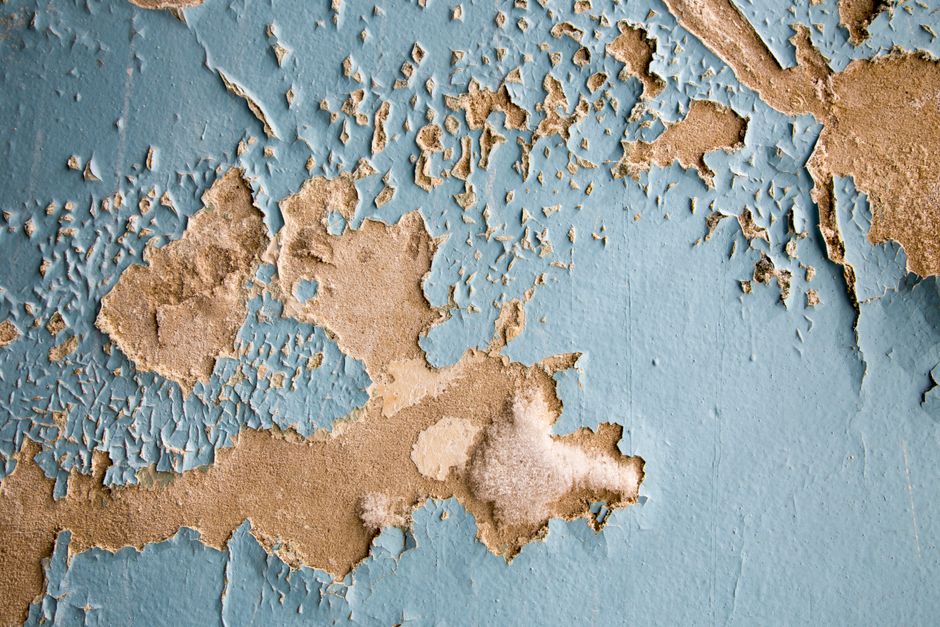
Homeowners with this system often report musty smells they can’t locate, a sudden worsening of allergies, or chronically high indoor humidity that their AC can’t handle. Eventually, more obvious signs appear: peeling paint, warped baseboards, or dark stains on the drywall. By the time you see these things, it’s a guarantee that the structural wood framing and sheathing behind the wall have been compromised by moisture and rot.
Your Local Experts in Climate-Specific Solutions
The laws of physics don’t change based on your parish. Whether you’re in a historic home in New Orleans, a new build in Covington or Mandeville, or a property in Metairie, Kenner, Slidell, or Baton Rouge, the problem is the same. Sunlight Contractors has served communities across the region, including Marrero, Harvey, LaPlace, Gretna, Destrehan, Saint Rose, Zachary, and even across the border in Bay St. Louis and Picayune, MS. We understand the unique challenges our Gulf Coast climate presents and have seen this failure in every type of home.
A full closed-cell spray foam application provides a superior, monolithic solution that eliminates these risks.
The right way to insulate a home in Louisiana isn’t about finding a cheap compromise; it’s about using a system designed to handle our relentless heat and humidity. That system is a full application of closed-cell spray foam.
The Right Way: Creating a True Air, Vapor, and Thermal Barrier
Unlike the flawed, multi-part Flash and Batt system, a full cavity application of closed-cell spray foam solves all the problems at once.
- It’s an Insulator: It provides a high R-value for thermal resistance.
- It’s an Air Barrier: It expands to fill every crack and crevice, creating a true, monolithic air seal that stops drafts.
- It’s a Vapor Retarder: Its closed-cell structure is impermeable to moisture. It stops water vapor from ever entering the wall cavity in the first place. There is no internal condensation plane because the foam itself is the barrier.
As a bonus, closed-cell foam is rigid and bonds directly to the sheathing and studs, adding significant structural strength to the wall assembly—a valuable benefit in our hurricane-prone region.
Comparing Performance: Why “Good Enough” Isn’t Good Enough Here
Let’s put it in black and white. The difference isn’t minor; it’s a fundamental gap in performance and safety.
| Feature | Flash and Batt System | Full Closed-Cell Spray Foam |
|---|---|---|
| Moisture Barrier | Creates an internal condensation plane | Acts as a true vapor barrier, blocking moisture |
| Air Seal | Prone to gaps and leaks during installation | Creates a monolithic, seamless air barrier |
| Installation Risk | High risk of failure from minor imperfections | Low risk; expands to fill all voids |
| Durability | Fiberglass component sags and holds moisture | Rigid, waterproof, and dimensionally stable for life |
| Long-Term Cost | Low upfront cost, high risk of expensive remediation | Higher upfront cost, protects home value and health |
The investment in a full spray foam job is an investment in your home’s health, durability, and long-term value.
With over 18 years of experience in Louisiana, Sunlight Contractors has seen the damage from failed Flash and Batt systems firsthand.
Our knowledge isn’t theoretical. It comes from being in the attics, crawl spaces, and wall cavities of Louisiana homes every single day. We are a Louisiana-based company providing spray foam insulation and damage restoration services to homeowners and businesses.
Our Expertise is Your Protection
We don’t just sell a product; we provide the right building science solution for our specific, challenging environment. Our long history in this market means we’ve seen what works and, more importantly, what fails. We refuse to install Flash and Batt because we know it’s a disservice to our clients and will ultimately lead to failure.
More Than Just Insulation: A Partner in Home Health
Because we also specialize in damage restoration, we’re often the ones called in to fix the mold and rot caused by these failed systems. We’ve had to perform extensive tear-outs, conduct mildew remediation, and repair structural wood damage all stemming from a bad insulation choice. We know exactly what to look for and how to make it right.
Protect Your Home from the Flash and Batt Trap
Don’t fall for the “best of both worlds” sales pitch. In Louisiana’s climate, Flash and Batt is the worst of both worlds, combining the air leakage potential of a bad foam job with the moisture-absorbing disaster of fiberglass. It’s a system that is fundamentally incompatible with our environment. If you have this system or are considering it for a new build, you need an expert assessment from a contractor who understands local building science. Your home is too valuable to risk on a flawed compromise.