

Spray Foam vs. Blown-In Insulation Around HVAC Ducts: Which Works Better in New Orleans?
Short answer: Spray foam can both insulate and seal air leaks around ductwork, while blown-in insulation is typically used to add broad attic coverage. The better option depends on duct condition, location, access, and moisture management.

In New Orleans, LA, hot, humid weather puts real demands on air-conditioning systems. Ducts that run through a hot attic, crawl space, or other unconditioned area can lose conditioned air or encounter conditions that lead to condensation. Choosing insulation without first checking the ductwork can hide problems instead of solving them.
Sunlight Contractors serves Louisiana homeowners and businesses with spray foam insulation, fireproofing, renovations, foundation repair, and soundproofing. For over 18 years, the company has worked on building improvements across Louisiana. That experience informs a practical point: insulation is only one part of the decision. Duct leakage, moisture, ventilation, access, and the surrounding building assembly all matter.
Key Takeaways
- Spray foam can provide air sealing and insulation when applied correctly; blown-in insulation primarily slows heat transfer.
- Blown-in insulation is often used to cover broad attic areas, including around ductwork that has been inspected and properly sealed.
- Neither product is right for every duct system or building.
- In New Orleans’ humid climate, check for leaks, damaged duct insulation, and condensation before covering ductwork.
- A sound plan considers the ducts and surrounding assembly together—not just the insulation product.
TL;DR
Spray foam may be a better fit when a project needs targeted air sealing as well as insulation. Blown-in insulation can work well for broad attic coverage when the ductwork is in sound condition and its leaks have been addressed. In New Orleans, the duct location and moisture conditions should guide the choice.
Which insulation works better around HVAC ducts: spray foam or blown-in?
Spray foam generally works better for sealing gaps around ducts, while blown-in insulation is generally better suited to covering broad attic areas. The distinction depends on what “around the ducts” means: insulating the attic or cavity that contains them is different from insulating or encapsulating the ducts themselves.
- Spray foam insulation
- A material applied as a liquid that expands and hardens into an insulating layer; depending on the product and application, it can also help form an air barrier.
- Blown-in insulation
- Loose-fill insulation, such as cellulose or fiberglass, distributed across an attic or into suitable cavities to slow heat transfer.
Both materials can contribute to an energy-efficiency plan, but they do different jobs. Duct sealing reduces unwanted air movement through joints or openings. Insulation slows heat flow between the duct and its surroundings. Improving one does not automatically fix the other. Sunlight Contractors’ overview of what spray foam insulation is and its article on blown-in cellulose insulation explain the materials in more detail.
The short answer by project goal
Choose insulation based on the problem the project needs to solve. The duct system and surrounding assembly should be checked for compatibility before installation.
| Project priority | Spray foam | Blown-in insulation |
|---|---|---|
| Addressing air leakage | Can seal suitable gaps when applied correctly | Does not seal duct joints |
| Covering a broad attic floor | Can be used in selected assemblies or areas | Commonly used for broad, even attic coverage |
| Reaching irregular spaces | Can conform to many shapes and gaps | Can fill some irregular areas if installed appropriately |
| Preserving access | May complicate access if it covers components | Can obscure duct routes or service points if ducts are buried |
| Typical fit | Targeted air sealing and insulation where suitable | Adding attic insulation after ductwork has been assessed and repaired |
How does spray foam insulation work around HVAC ducts?
Spray foam expands to fill suitable gaps and can create an air barrier around ductwork when installed correctly. The goal may be to insulate an assembly, seal openings near penetrations, or address air movement in a specific area. The exact approach depends on the foam type and the construction details.
Open-cell and closed-cell spray foam are not interchangeable. They have different physical properties and are selected for different assemblies and project conditions. Product choice should reflect the intended use, moisture considerations, and installation requirements—not a broad assumption that one type is always best. Sunlight Contractors discusses these differences in its guide to open-cell versus closed-cell spray foam.
Potential applications around ducts include sealing gaps near framing or penetrations and insulating awkward spaces that are difficult to cover evenly with loose-fill material. But placement matters. A contractor must select an appropriate product, apply it at the required thickness, maintain clearances around heat-producing equipment and components, and preserve access to equipment that may need inspection or repair.
Spray foam should not be applied indiscriminately over duct connections, service points, or equipment. A poor installation can make future work harder and may conceal a developing problem. Professional application and compliance with applicable building and product requirements are essential. For more on installer selection, see Sunlight Contractors’ advice on choosing a spray foam contractor.
How does blown-in insulation perform around HVAC ducts?
Blown-in insulation can reduce heat transfer across an attic, but it does not seal duct leaks by itself. Installers distribute loose-fill material over an attic floor or into appropriate spaces, working around framing, wiring, and other obstacles.
This makes blown-in insulation a practical option when the goal is to increase coverage across a large, open attic rather than treat each duct individually. It can surround some irregular areas, though even depth and coverage still matter. Material type, installation quality, and the shape of the attic all affect the result.
There are trade-offs. Loose-fill insulation can shift or settle depending on the product and installation. If ducts are buried, it may also become harder to locate connections, inspect the system, or reach service points. Most importantly, loose-fill insulation does not reconnect a separated duct, repair damaged duct insulation, or seal a leaking joint. Those issues need attention before new insulation goes down.
Sunlight Contractors provides information on blown insulation and attic insulation for homeowners comparing options.
What are the main differences between spray foam and blown-in insulation around ducts?
The main difference is that spray foam can address air leakage as well as heat flow, while blown-in insulation mainly addresses heat flow. Actual performance depends on the product, installation, building assembly, and condition of the duct system.
| Factor | Spray foam | Blown-in insulation |
|---|---|---|
| Air sealing | Can seal suitable gaps when applied correctly | Does not seal duct joints |
| Typical use near ducts | Sealing and insulating selected areas or suitable assemblies | Covering broad attic areas around assessed ductwork |
| Coverage | Adapts to many irregular spaces | Best suited to accessible areas that can be covered evenly |
| Access and serviceability | Can complicate access if it covers components | Can obscure duct routes and service points if ducts are buried |
| Installation needs | Requires careful product selection, placement, and application | Requires appropriate depth and consistent coverage |
| Best fit | Projects where air sealing is a priority and the assembly is suitable | Projects focused on broad attic insulation after duct repairs |
A material’s name does not guarantee the finished result. Installation quality and the condition of the ductwork matter just as much as the insulation choice. A broader overview of insulation options is available in Sunlight Contractors’ guide to choosing the best insulation for a home.
Which insulation is better for New Orleans’ hot, humid climate?
In New Orleans, insulation around HVAC ducts should be chosen with both heat and moisture management in mind. Hot, humid air can meet a cooler duct surface, and under the wrong conditions that interaction can contribute to condensation.
The risk depends on the full assembly: where the ducts are located, whether their existing insulation is intact, how humid the surrounding space is, and whether air is leaking into or out of the duct system. Attic temperatures, ventilation, and other moisture sources also influence conditions. A home in the historic center of New Orleans may have a different attic layout and access constraints than a newer home in Metairie or Kenner, so a one-size-fits-all recommendation is not reliable.
Sunlight Contractors’ point of view is straightforward: do not choose a product first and diagnose the building later. Start with the duct route and condition, then look at moisture and access. That approach is especially important in older homes and in buildings where renovations, HVAC changes, or previous insulation work have altered the assembly.
For related guidance, see the company’s discussion of attic ductwork and moisture concerns and dehumidification and insulation.
Can spray foam or blown-in insulation prevent duct condensation?
Insulation can help limit temperature differences at duct surfaces, but it cannot guarantee that condensation will stop. Moisture may also be related to air leakage, damaged duct insulation, high humidity, or installation details.
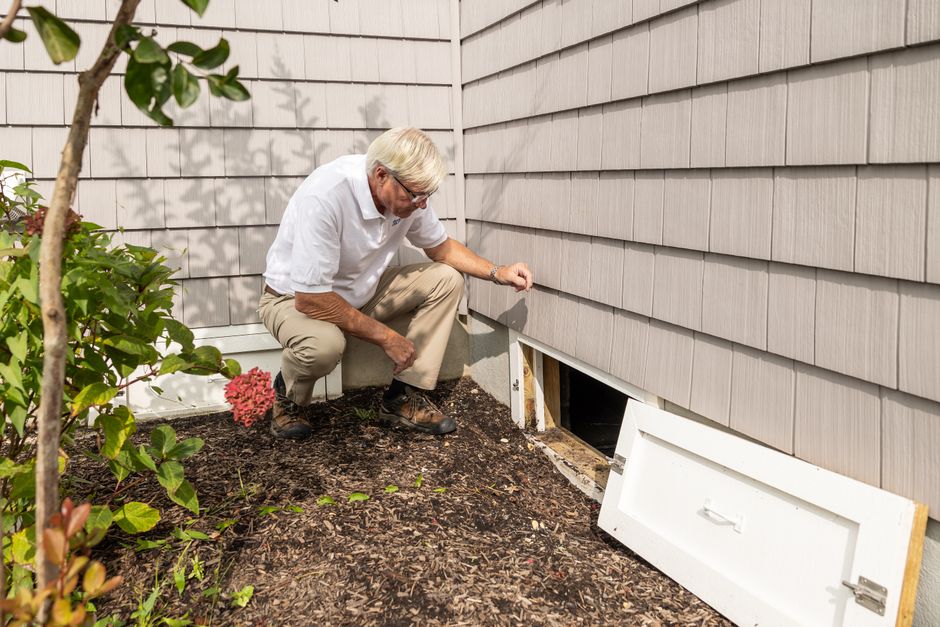
Covering a damp or damaged area without finding the cause can hide staining or deterioration and make inspection harder later. Before adding insulation, identify whether the duct is leaking, whether its existing insulation is damaged, and whether moisture is coming from the surrounding space or another source. Resolve the underlying issue first, then choose a suitable insulation approach.
This is why a moisture check belongs in the assessment—not as an afterthought. Sunlight Contractors discusses building moisture concerns in its guide to moisture remediation and home protection.
Should homeowners seal HVAC ducts before adding insulation?
Yes, homeowners should generally have accessible ductwork assessed and appropriate leaks repaired before it is covered with new attic insulation. Leaks can waste conditioned air and undermine the benefit of insulation improvements.
A sensible sequence is:
- Inspect accessible ducts, connections, and existing insulation.
- Repair damaged sections and seal appropriate joints with suitable materials.
- Investigate condensation, staining, or other moisture concerns.
- Add insulation that suits the duct system and surrounding space.
- Keep service points and components that require inspection accessible.
Duct sealing requires the right materials and safe work practices. It should also follow applicable codes and manufacturer guidance. Where the work involves HVAC equipment or system performance, coordination with a qualified HVAC professional may be needed.
What are the risks of insulating over HVAC ducts?
Insulating over ducts without checking their condition can hide leaks, damage, or moisture problems. It can also make future inspection and repair more difficult.
Before work begins, identify duct connections, equipment, access panels, and service points. Consider whether the proposed insulation could cover a component that needs clearance or routine access. Moisture is another concern: insulation should not be used to conceal an unresolved leak or damp assembly.
Documenting duct routes before loose-fill insulation is installed can help preserve serviceability. With spray foam, careful placement and clearances are especially important because cured foam may be difficult to remove from areas that need later access.
How should homeowners choose between spray foam and blown-in insulation?
Homeowners should choose based on duct condition, attic layout, moisture concerns, and whether air sealing is needed. The decision should follow an inspection rather than rely on a general claim that one insulation type is always superior.
Consider spray foam when targeted air sealing is a primary goal and the surrounding assembly is suitable. Consider blown-in insulation when the goal is broad attic coverage and the ducts have been assessed, repaired where needed, and kept accessible. A combined plan may make sense when ducts need repairs or sealing before additional attic insulation is installed.
If the ducts are inaccessible, visibly damaged, or affected by moisture, get the conditions evaluated before covering them. A blower-door test or energy assessment may also help identify air leakage elsewhere in the building; Sunlight Contractors explains the process in its guide to blower-door testing.
What should contractors evaluate before insulating around HVAC ducts?
Contractors should inspect the duct system and surrounding assembly before selecting or installing insulation. That initial review helps prevent a new layer from covering a problem the building still needs to address.
A useful pre-installation checklist includes:
- Duct condition, connections, and existing insulation
- Duct and HVAC equipment locations
- Evidence of condensation, staining, or other moisture
- Required clearances and access needs
- Air-sealing priorities and penetrations
- Product suitability and application requirements
- Coordination needs with HVAC, electrical, or other building trades
For contractors, the goal is not simply to apply material around ductwork. It is to leave the assembly insulated, serviceable, and appropriate for the conditions on site. If the scope extends beyond insulation, coordination among trades helps ensure that repairs and access needs are addressed before areas are covered.
How does Sunlight Contractors serve New Orleans and nearby communities?
Sunlight Contractors serves Louisiana homeowners and businesses with insulation and related building services, including projects in the Greater New Orleans area. The company has served Louisiana for over 18 years, providing spray foam insulation, fireproofing, renovations, foundation repair, and soundproofing.
That work connects to common building concerns in the region: humid conditions, older buildings, attic comfort, and improvements to the building envelope. Sunlight Contractors serves New Orleans, Metairie, Marrero, Harvey, Mandeville, LaPlace, Norco, Covington, Gretna, Destrehan, Lacombe, Saint Rose, Slidell, Kenner, and Baton Rouge, along with Baker, Slaughter, Zachary, Bay St. Louis, Picayune, and Diamondhead.
The company’s broader perspective is useful when a project involves more than insulation alone. A home may need duct repairs, moisture evaluation, or coordination with renovation work before new material is installed. Sunlight Contractors shares additional building and insulation guidance in its blog.
What questions should you ask before hiring an insulation contractor?
Questions about duct inspection, moisture control, materials, and access help homeowners compare insulation proposals more effectively. A clear proposal should explain the intended work and how the contractor will handle conditions that could affect the result.
Ask:
- Will you inspect and document the ducts before insulating?
- How will you address duct leaks or condensation concerns?
- Which insulation product do you recommend, and why is it suitable for this assembly?
- How will required clearances and service access be maintained?
- What preparation and cleanup are included?
- Which parts of the work need coordination with an HVAC professional?
- How will you document duct routes and covered service locations?
Sunlight Contractors’ guide to questions to ask when hiring a contractor offers additional considerations for comparing contractors and project plans.
Final Thoughts
Spray foam and blown-in insulation serve different purposes around HVAC ducts. Spray foam can help seal suitable gaps while adding insulation. Blown-in insulation is commonly used for broad attic coverage, but it does not repair or seal leaky duct joints.
In New Orleans, the right choice depends on where the ducts run, their condition, the attic or cavity layout, and how moisture is managed. Check the ductwork before covering it. Then select insulation that fits the building assembly and leaves necessary service points accessible.
Sunlight Contractors brings over 18 years of Louisiana experience in spray foam insulation, fireproofing, renovations, foundation repair, and soundproofing to building projects across the state. For homeowners and contractors weighing insulation options, the practical starting point is the same: assess the ducts and surrounding space before choosing how to insulate.